Beef organ supplements are taking over the wellness world, and women are leading the charge. From TikTok influencers to functional medicine doctors, everyone's talking about eating liver capsules for energy, hormone balance, and fertility. But is this ancestral health trend just clever marketing, or does eating desiccated beef organs actually deliver real benefits?
This guide cuts through the noise. You'll discover exactly what beef organ supplements contain, which specific benefits matter for women's health, how to choose quality products, and whether this trend is worth your time and money.
What Are Beef Organ Supplements (And Why Women Are Taking Them)
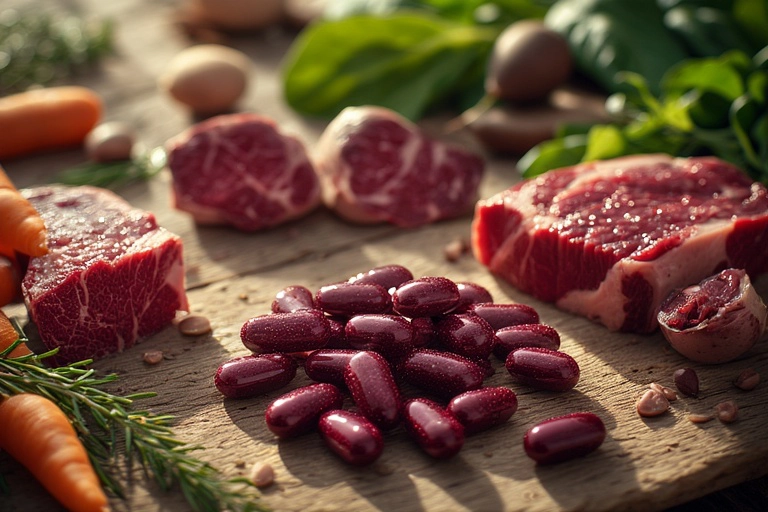
Beef organ supplements are freeze-dried, powdered organs from grass-fed cattle—typically liver, heart, kidney, spleen, and pancreas—packed into capsules[1][2]. The goal: deliver the nutrient density of organ meats without the taste, texture, or cooking hassle[1][2][3].
The ancestral health argument: Our ancestors ate "nose-to-tail," consuming every part of the animal[3][4]. Organs contain concentrated nutrients—vitamins A, B12, iron, zinc, CoQ10, folate—that muscle meat simply doesn't match[1][2][4].
Why modern women are interested:
- Iron deficiency affects 25-30% of women of reproductive age[5][6]
- Hormonal imbalances (PCOS, perimenopause) are increasingly common[1][7]
- Fertility concerns drive interest in nutrient-dense foods[8][9]
- Energy crashes and fatigue plague busy professionals[1][10]
- Clean, whole-food supplements appeal more than synthetics[2][11]
The pitch: One capsule delivers nutrients from eating actual organ meats, without cooking beef liver or dealing with the metallic taste[1][2].
The Nutrient Profile: What's Actually Inside
Beef organs pack nutrients that are either rare in other foods or exist in less bioavailable forms[1][2][4]. Here's what matters for women:
Heme Iron (Most Absorbable Form)
Where it's found: Beef liver and spleen (highest concentration)[1][12].
Why women need it: Menstrual blood loss creates ongoing iron demand. Women who are iron-deficient experience fatigue, weakness, brain fog, and poor exercise performance[5][6][13].
Bioavailability advantage: Heme iron (from animal sources) absorbs 2-3x better than non-heme iron from plants[12][13]. 100g beef liver provides 338% of daily iron needs[1][12].
Vitamin B12 (Active Form)
Where it's found: Beef liver and kidney. 100g beef liver = 988% of daily B12[1][14].
Why women need it: B12 supports red blood cell formation, nervous system function, energy production, and mood regulation[1][14]. Women on plant-based diets or hormonal birth control are particularly at risk for deficiency[14][15].
Fertility connection: Higher B12 levels correlate with better fertility outcomes in women undergoing IVF[8][16].
Preformed Vitamin A (Retinol)
Where it's found: Beef liver. 100g provides 338% of daily vitamin A[1][17].
Why women need it: True vitamin A (not beta-carotene) supports hormone production, ovulation, egg quality, skin health, and immune function[8][17][18].
Fertility impact: Vitamin A deficiency leads to reproductive failure before implantation in women[8][18]. Essential for embryonic development[8].
Folate (Bioavailable Form)
Where it's found: Beef liver. 100g provides 72% of daily folate[1][19].
Why women need it: Critical for fetal development (prevents neural tube defects), supports healthy ovulation, improves egg development, and increases live birth rates[8][19][20].
Post-pill recovery: Hormonal birth control depletes folate. Beef liver helps restore levels[15][21].
CoQ10 (Cellular Energy)
Where it's found: Beef heart primarily, some in liver[1][22].
Why women need it: CoQ10 declines with age. Supports mitochondrial function, heart health, energy production, and egg quality in women over 35[22][23].
PCOS & fertility: CoQ10 supplementation improves insulin and testosterone levels in women with PCOS, and enhances ovarian health for IVF[9][23].
Zinc, Selenium, Copper (Essential Minerals)
Where found: Beef kidney and liver[1][24].
Why women need them: Zinc supports hormone balance, immune function, and skin health. Selenium protects eggs and follicular fluid. Copper aids iron absorption[1][24][25].
PCOS benefit: Zinc supplementation helps with insulin resistance, acne, hair growth, and hair loss in PCOS[9][25].
Specific Benefits for Women's Health
Here's where beef organ supplements show real promise for women, backed by nutrient science:
1. Combats Iron Deficiency Anemia
The problem: 25-30% of women have iron-deficiency anemia, causing fatigue, weakness, dizziness, and poor concentration[5][6][13].
How organs help: Heme iron from beef liver and spleen absorbs far better than plant iron or synthetic iron supplements[12][13]. Regular intake may prevent anemia and restore energy levels[1][13].
Real-world reports: Women consistently report reduced fatigue and better energy after consistent use[1][10].
2. Supports Hormonal Balance
The nutrients: B vitamins, zinc, vitamin A, and healthy fats in organs support hormone production[1][7][26].
How it works: These nutrients help regulate estrogen, progesterone, and other hormones. Imbalances manifest as irregular cycles, mood swings, fatigue, and skin issues[1][7].
Target conditions: PCOS, perimenopause, post-pill syndrome[1][7][9].
3. Enhances Fertility & Reproductive Health
Key nutrients: Folate, B12, zinc, vitamin A, selenium, choline[8][9][16].
Evidence: Beef liver contains the exact nutrients needed for healthy ovulation, egg quality, and uterine environment[8][9]. Studies link higher B12 with better IVF outcomes[8][16].
Male factor: Vitamin A and zinc also boost sperm count and motility, making it beneficial for couples trying to conceive[8][27].
4. Reduces PMS Symptoms
Active compounds: Vitamin B6, magnesium, zinc[1][28].
How they help: Support healthy hormone cycles, reduce bloating, mood swings, cramps, breast tenderness, and fatigue[1][28].
Consistency matters: Women report symptom relief with regular use over 2-3 months[1][10].
5. Boosts Metabolism & Energy
Mechanisms: B vitamins and thyroid-supporting nutrients (selenium, zinc, iron) regulate energy metabolism[1][29].
Benefits: Better fat-burning, reduced sluggishness, more consistent energy, easier weight maintenance[1][29].
Thyroid connection: Many women have subclinical thyroid dysfunction. Organ nutrients support healthy thyroid function[1][29].
6. Improves Skin, Hair, and Nails
Active nutrients: Collagen, zinc, vitamin A, B vitamins[1][30].
Results: Clearer skin, reduced acne, stronger hair, healthier nail growth[1][30].
Timeline: Visible improvements typically appear after 6-8 weeks of consistent use[1][10].
7. Post-Pregnancy & Breastfeeding Support
Nutrient depletion: Pregnancy and breastfeeding drain iron, B12, folate, zinc, and vitamin A[31][32].
How organs help: Replenish depleted nutrients faster than diet alone. Support energy levels for new mothers[31][32].
Safety note: Always consult healthcare provider during pregnancy and breastfeeding before starting supplements[11][31].
Types of Beef Organ Supplements
Not all organ supplements are created equal. Here's what's available:
Single-Organ Supplements
Beef Liver: Most popular. Richest in iron, vitamin A, B12, folate[1][2][12]. Best for iron deficiency and general wellness.
Beef Heart: Highest in CoQ10. Best for cardiovascular health, energy, athletic performance[1][22].
Beef Kidney: Rich in selenium, riboflavin, B12. Best for antioxidant support, energy metabolism[1][24].
Beef Spleen: Highest heme iron concentration. Best for severe iron deficiency[1][12].
Multi-Organ Blends
What they contain: Combination of liver, heart, kidney, spleen, pancreas[1][2][33].
Advantage: Broader nutrient spectrum in one product. Convenient for general wellness[1][33].
Popular brands: Ancestral Supplements, One Earth Health, Ancestral Nutrition[2][33][34].
Choosing Quality Supplements: What Actually Matters
The organ supplement market is exploding. Here's how to separate quality from marketing:
1. Source: Grass-Fed, Grass-Finished
Why it matters: Grass-fed beef has better nutrient profiles—higher omega-3s, CLA, vitamins[2][35].
What to verify: 100% grass-fed AND grass-finished (not grain-finished)[2][35]. Look for New Zealand, Australian, or Tasmanian cattle (stricter standards)[2][11].
2. Processing: Freeze-Dried (Not Heat-Processed)
Why it matters: Heat destroys heat-sensitive nutrients (B vitamins, enzymes, peptides)[2][11].
What to look for: "Freeze-dried" or "lyophilized" on label. Preserves maximum nutritional integrity[2][11].
3. No Fillers, Binders, or Additives
Red flags: Silicon dioxide, magnesium stearate, rice flour, gelatin capsules with additives[2][11].
What to look for: "100% pure organ meat" with no synthetic additives[2][11].
4. Third-Party Testing
What to verify: Testing for heavy metals, pesticides, hormones, antibiotics[2][11].
Certifications: Look for brands with transparent testing protocols and published results[2][11].
5. Certified Humane & Ethical Sourcing
Why it matters: Animal welfare, environmental sustainability, quality control[2][11].
What to look for: Certified Humane®, pasture-raised certifications[2][11].
Dosing, Timing, and Realistic Expectations
How Much to Take
Typical dose: 3,000-6,000 mg daily (6-12 capsules)[1][2][36].
Start low: Begin with 1-2 capsules daily for first week, gradually increase[2][11].
Consistency matters: Daily use over 2-3 months shows best results[1][10][11].
Best Time to Take
With food: Taking with/after meals improves absorption[2][11].
Morning or midday: B vitamins may boost energy—avoid before bed if sensitive[2][11].
Timeline for Results
Energy & mood: 2-4 weeks with consistent use[1][10].
Skin, hair, nails: 6-8 weeks visible improvements[1][10].
Hormonal balance: 2-3 months for cycle regulation[1][7].
Iron levels: 8-12 weeks to significantly raise iron stores[5][13].
Potential Risks and Considerations
Vitamin A toxicity: Beef liver is extremely high in vitamin A. Excessive intake (over 10,000 IU daily long-term) can cause toxicity[37][38]. Pregnant women should avoid high-dose vitamin A[37][38].
Cholesterol concerns: Organ meats contain cholesterol. If you have familial hypercholesterolemia, consult doctor[38][39].
Medication interactions: Iron can interact with antibiotics, thyroid medications. B12 may interact with metformin[38].
Quality matters: Poor-quality supplements from grain-fed, factory-farmed cattle may contain hormones, antibiotics, toxins[2][11].
Not a replacement: Supplements don't replace a nutrient-dense diet. They're an enhancement, not a foundation[11][38].
Expert skepticism: While anecdotal reports are strong, high-quality clinical studies on beef organ supplements specifically are limited[40]. Most evidence is extrapolated from nutrient research[40].
Who Should Consider Beef Organ Supplements
Strong candidates:
- Women with iron-deficiency anemia or low ferritin[5][13]
- Women with PCOS, irregular cycles, or hormone imbalances[7][9]
- Women trying to conceive or undergoing fertility treatment[8][9]
- Women recovering from hormonal birth control[15][21]
- Perimenopausal women experiencing fatigue, mood changes[1][7]
- Athletes and active women with high nutrient demands[1][10]
- Women following plant-based or restrictive diets (B12, iron deficiency risk)[14][15]
Proceed with caution:
- Pregnant women (vitamin A concerns—consult doctor)[37][38]
- Women with hemochromatosis or iron overload[38]
- Those with familial hypercholesterolemia[38][39]
- Anyone on medications (check interactions)[38]
Common Questions About Beef Organ Supplements
Q: Do they actually work, or is it just placebo?
A: The nutrients in organ meats are well-documented. Whether capsule form delivers the same benefits as eating whole organs needs more research[40]. Anecdotal evidence is strong, clinical trials are limited[40].
Q: Can I just eat organ meats instead?
A: Yes. 100g beef liver 1-2x weekly provides similar nutrients[1][12]. Supplements offer convenience for those who can't stomach the taste[1][2].
Q: Are they safe during pregnancy?
A: High-dose vitamin A raises concerns. Always consult your doctor[37][38]. Some practitioners recommend lower doses after first trimester[31].
Q: Will they raise my cholesterol?
A: Dietary cholesterol has less impact than previously thought for most people[39]. If you have familial hypercholesterolemia, check with doctor[38][39].
Q: How long do I need to take them?
A: Organ supplements work best as long-term support, not quick fixes[11]. Many women use them indefinitely as part of wellness routine[1][10].
The Verdict: Is This Trend Worth Your Time?
The honest truth: Beef organ supplements deliver concentrated nutrients that many women need—especially iron, B12, folate, and vitamin A[1][2][12]. If you're deficient in these nutrients, organs provide bioavailable forms your body can actually use[1][12][13].
Where the evidence is strong: Iron deficiency, fertility support (via folate/B12/vitamin A), hormone balance (via B vitamins and zinc), energy support (via B12 and iron)[1][8][13].
Where evidence is weaker: Specific claims about "detoxification," "supporting like organs," or curing chronic conditions lack rigorous clinical trials[40].
Is it worth it?
For women with documented nutrient deficiencies, PCOS, fertility concerns, or post-pill hormone recovery—beef organ supplements offer concentrated, bioavailable nutrition that's hard to match elsewhere[1][8][9][13].
For women with adequate nutrient status eating nutrient-dense diets—the benefits are less clear. You might not notice dramatic changes[11][40].
The bottom line: This isn't magic. It's concentrated nutrition. If you need the nutrients organs provide, you'll likely benefit. If you don't, you're paying for expensive vitamins you might not absorb or utilize[40].
Choose grass-fed, freeze-dried, tested products. Start low. Monitor how you feel. And remember: supplements enhance a healthy lifestyle—they don't replace it[2][11][38].